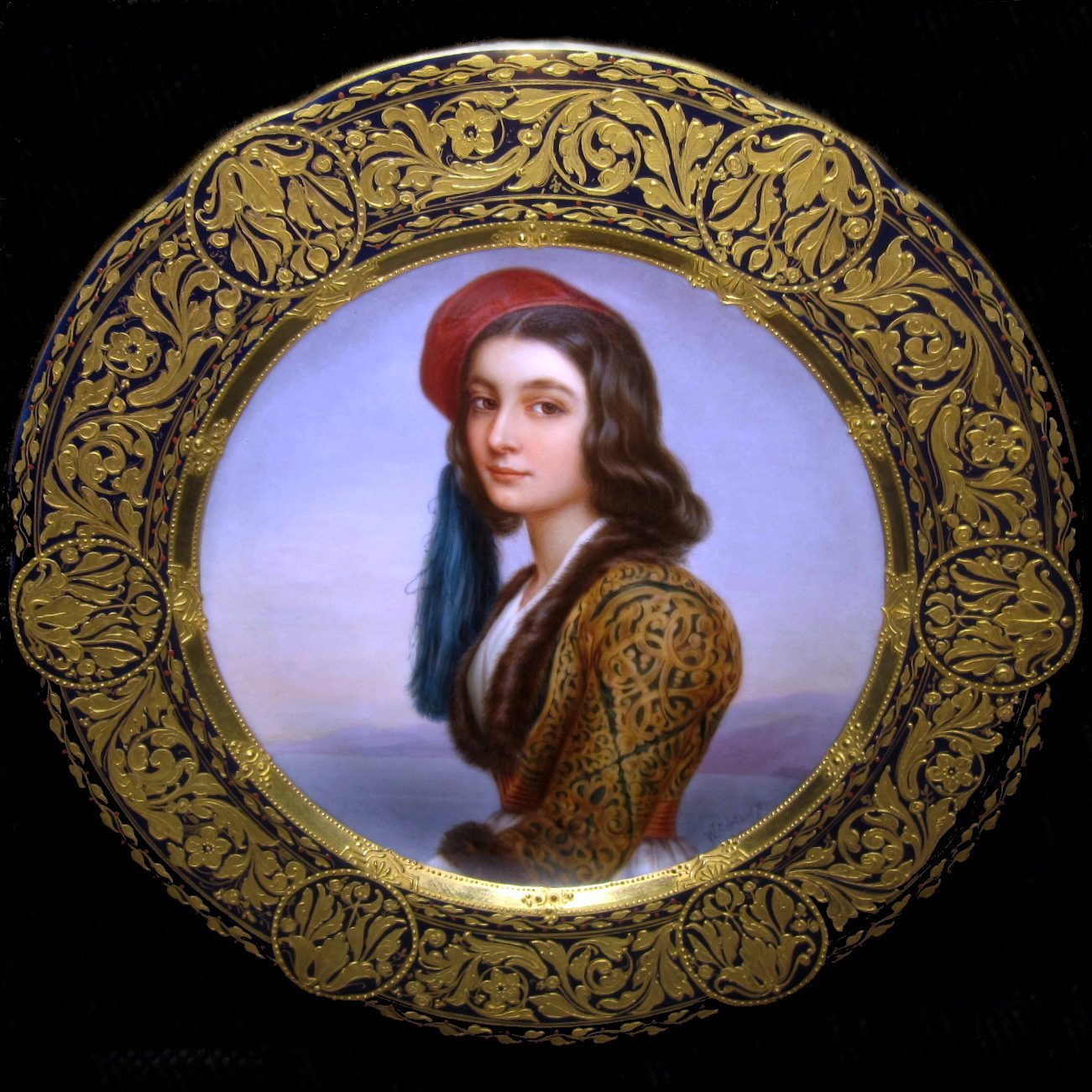
This fascinating story starts with Otto (1815-1867) – the second son of King Ludwig I of Bavaria who ruled as King of Greece from the establishment of the monarchy on 27 May 1832, under the Convention of London, until he was deposed on 23 October 1862. Otto ascended the newly created throne of Greece at age 17. His government was initially run by a three-man regency council made up of Bavarian court officials, but Otto removed the regents when they proved unpopular with the people, and he ruled as an absolute monarch. Eventually his subjects’ demands for a constitution proved overwhelming, and in the face of an armed (but bloodless) insurrection, Otto granted a constitution in 1843.
In 1836 Otto married a Bavarian princess Amalia. The new queen required a group of ladies in waiting. All but 1 were Germans. The only Greek at the court was Katerina “Rosa” Botsaris, born in 1820, the daughter of the hero of the Greek revolution Markos Botsaris.
Here’s how she was the described by the diarist Christiane Lüth:
“The Greek, very beautiful Rosa Botzaris was not agreeable, but stingy and hated everything German. She was poor, but the glory which surrounded the name of her father, the freedom hero, Marko Botzaris, shone its light over her. When she travelled with the Queen, she was much celebrated for her beauty, which was highlighted by her national costume. She hid the fact that she understood the German language and spread dangerous political comments around her which much damaged Their Majesties, her benefactors.”
As a Lady in Waiting, Katerina accompanied Amalia on her official visits to the royal courts of various European countries. In 1844, she was honored by the king of Bavaria, Ludwig I, with a Golden Cross. Furthermore, during her stay in Bavaria, she won the admiration of the public for both her beauty and being the daughter of the famous freedom fighter. And that’s when she had her portrait painted by Joseph Stieler for the king’s Gallery of Beauties. She was posing in the attire called “Amalia dress” and was often mistaken for Queen Amalia herself.
A Damask rose species bred in 1856 was named Rosa Botsaris after her.