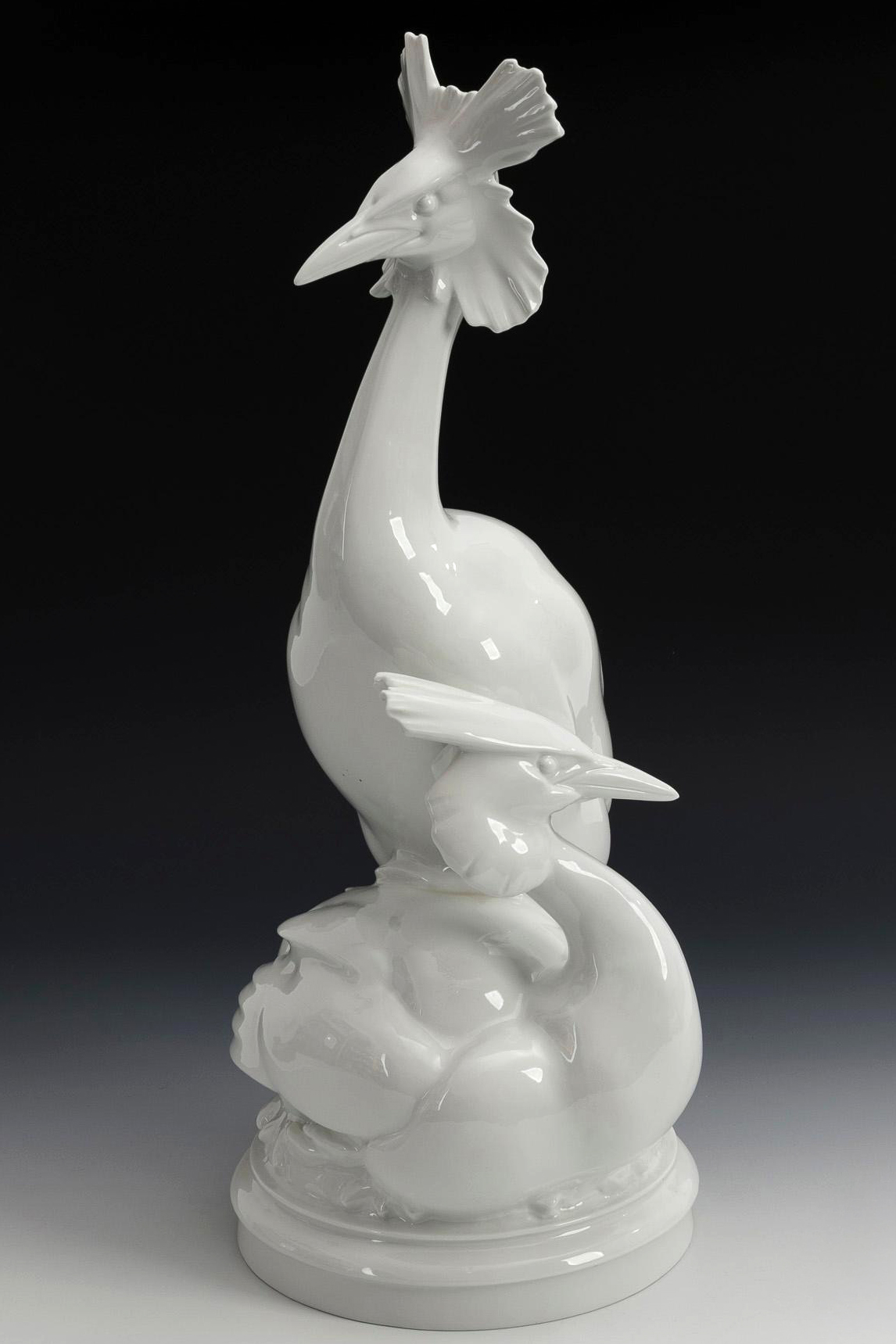
The independent Berlin sculptor. Began collaborating with the Meissen Porcelain Manufactory in 1919, when the factory commissioned him to create several models, including an ambitious table centerpiece based on Reineke Fuchs, the famous animal fable popularized in Germany by Johann Wolfgang von Goethe. Esser’s importance to the manufactory was reflected in his contract: he was to receive 10% of the profits from any of his models for twenty years, an unusually generous arrangement that demonstrated the high value placed on his artistic contribution.
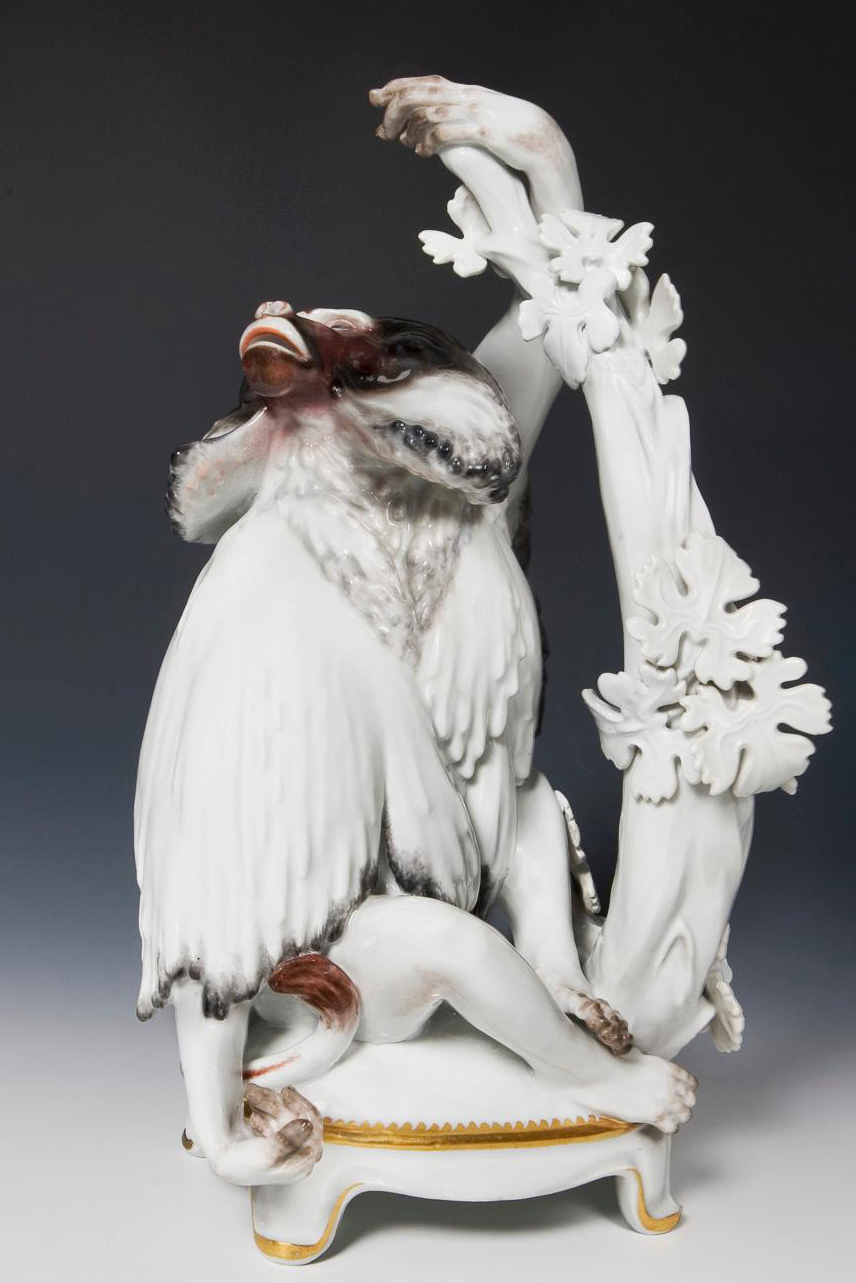
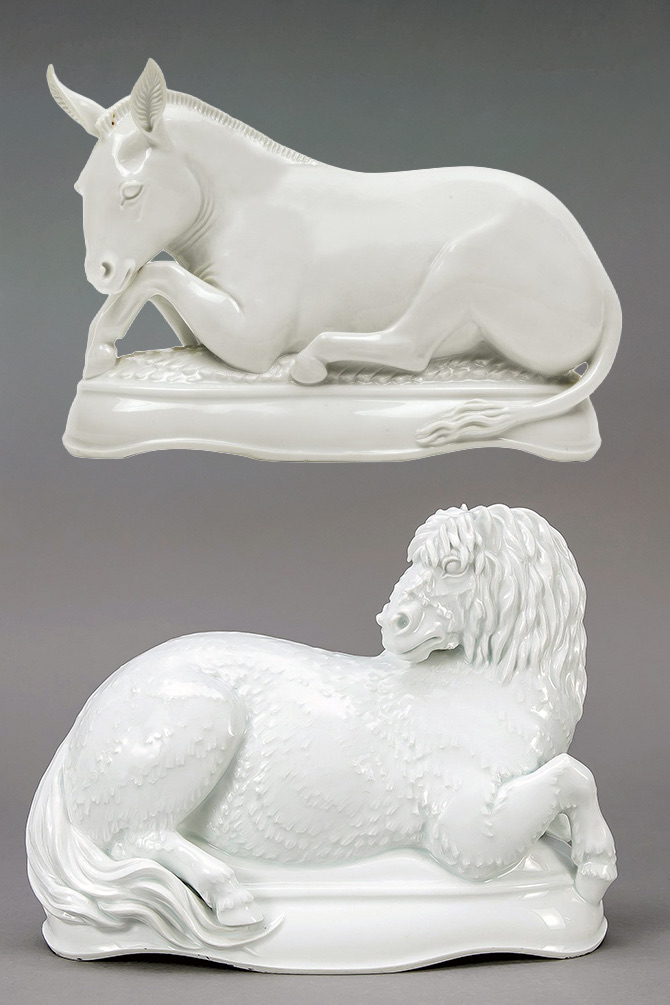
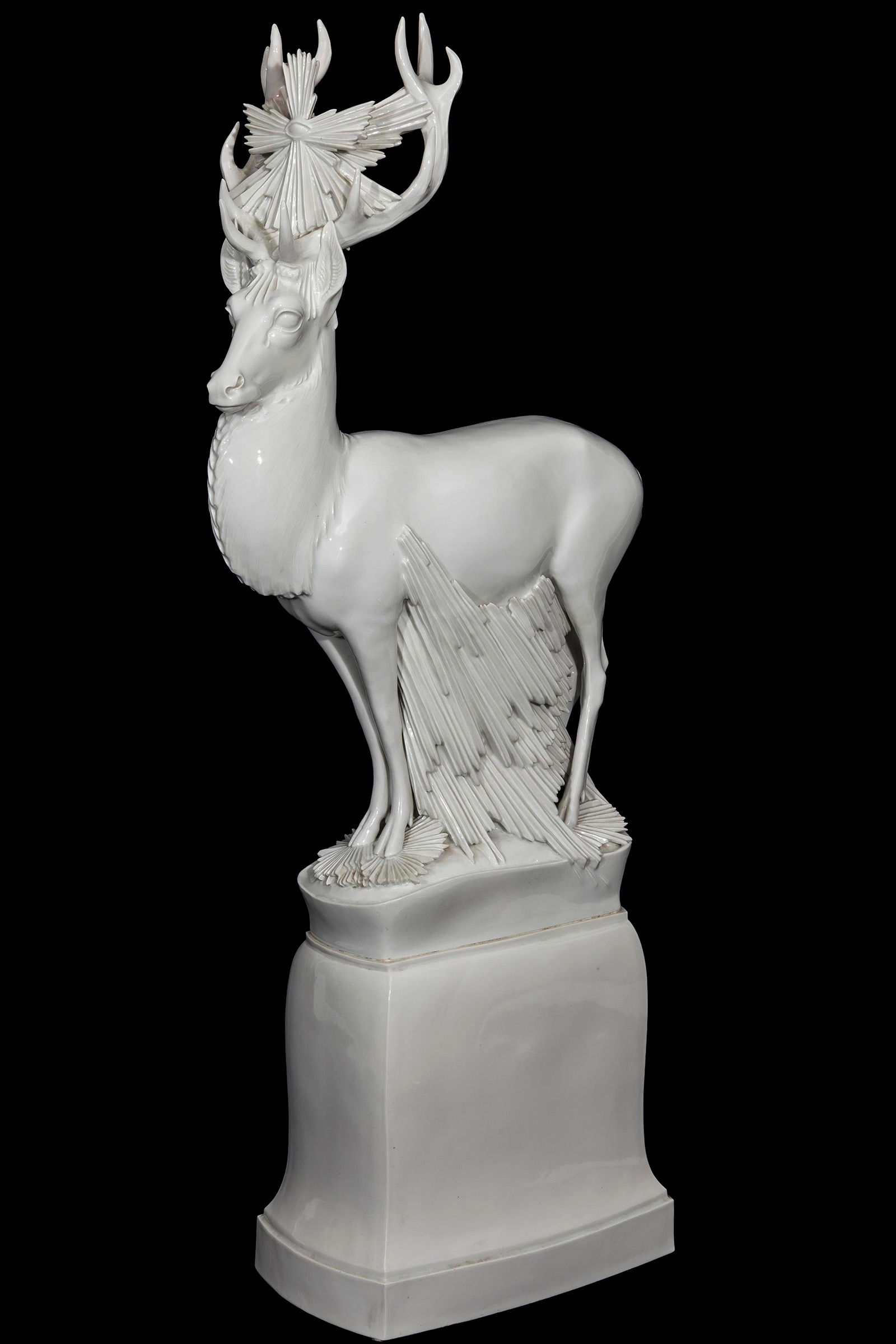
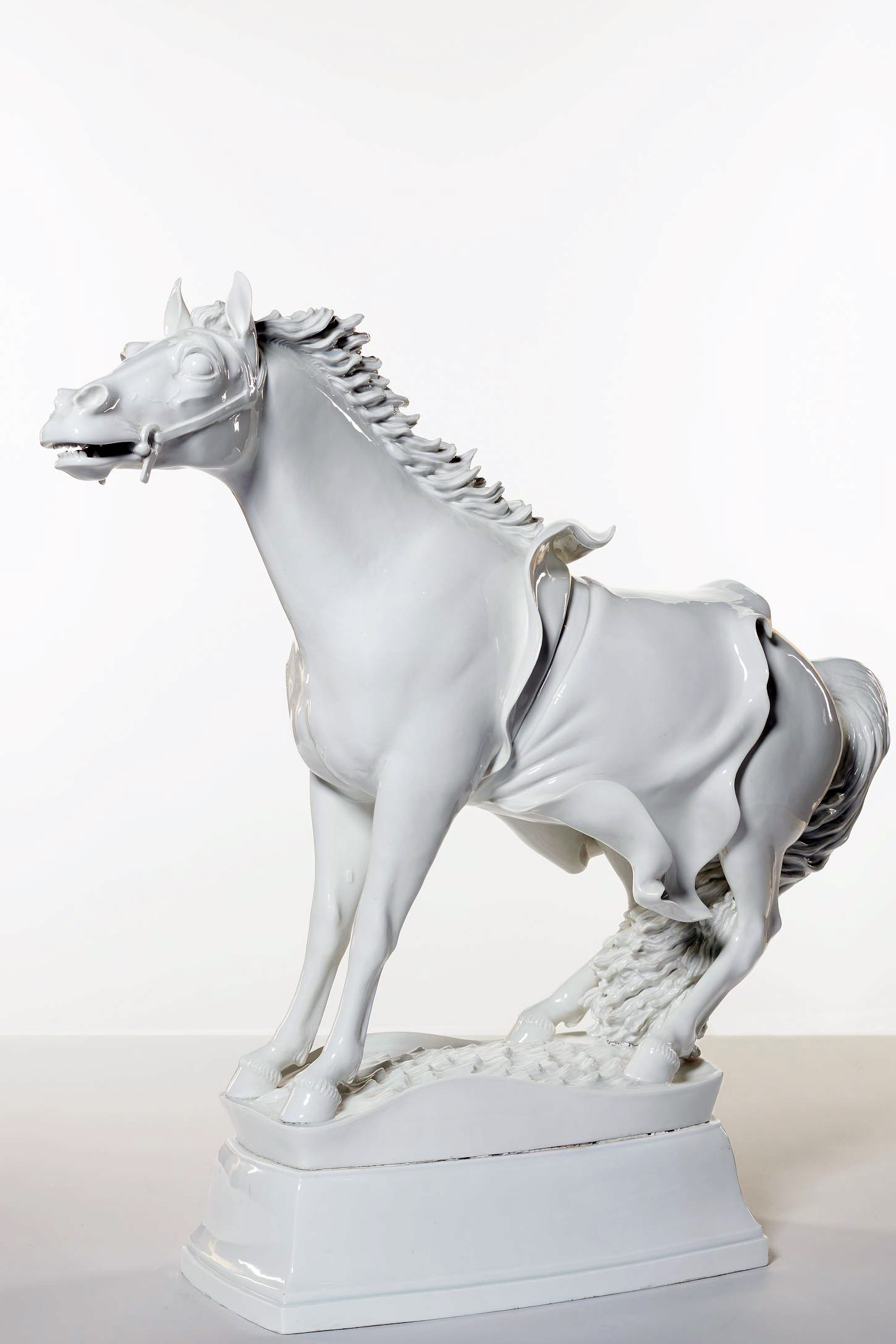
The centerpiece was conceived as an elaborate composition of 75 individual elements, including numerous animal figures as well as flower and fruit baskets. Esser became so deeply involved in the development of the Reineke Fuchs that he temporarily relocated to Meissen in 1920 in order to oversee the work more closely. The project ultimately occupied him until 1926. Soon afterward, the severe economic instability of the late 1920s—including the period of hyperinflation and the global economic downturn—greatly disrupted luxury markets. As a result, it remains uncertain whether the complete centerpiece was ever produced or sold commercially.
Reineke Fuchs—also known internationally as Reynard the Fox—is a cycle of medieval allegorical animal tales featuring anthropomorphic characters. These satirical stories, widely circulated across Europe for centuries, critique human society and politics through the behavior of animals, making them an especially fitting subject for Esser’s richly animated sculptural interpretation.