
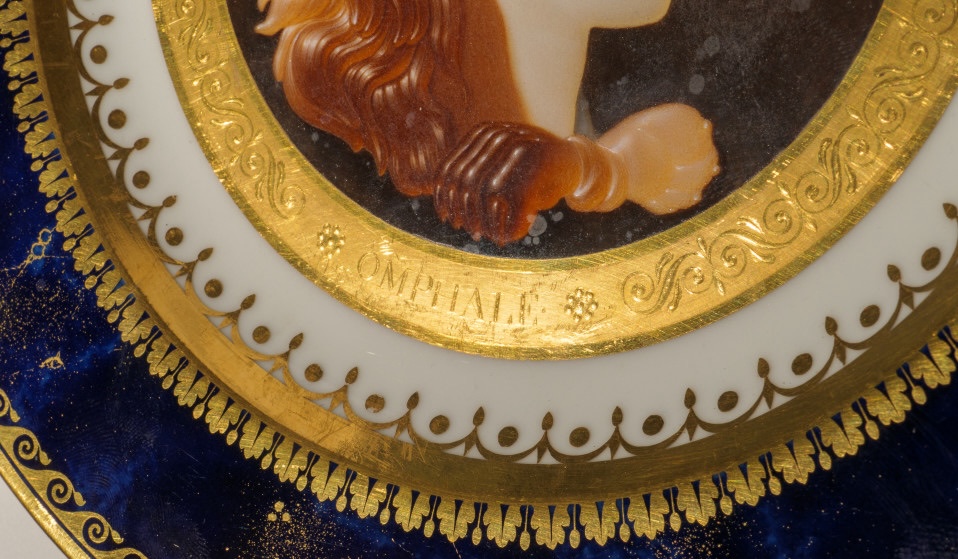
One of 3 plates brought in 1814 to Berlin for the Königliche Porzellan Manufaktur (KPM), the emperor’s porcelain factory, so that Gottfried Wilhelm Völcker, one of their portraitists, could copy the plates for KPM.
The plates were used as examples for painters of the KPM. However, they were never returned, the reason for this is unknown.
Omphale was a queen of Lydia (modern Turkey) who famously had Heracles (Hercules) as a slave for a period of time. During this servitude, roles were often reversed, with Omphale wearing Heracles’ lion skin and wielding his club, while Heracles dressed in women’s clothing and performed domestic tasks. This role reversal is a common theme in art depicting Omphale and Heracles, symbolizing the temporary suspension of traditional power dynamics. The cameos captures Omphale wearing the lion skin, a visual representation of her dominance over the hero.
After finger-ring sardonyx cameo made by Johann Thomas Walther in late 18th century, currently in British Museum:
https://www.britishmuseum.org/collection/object/H_1978-1002-1109