
Агит тарелка “Капитал”
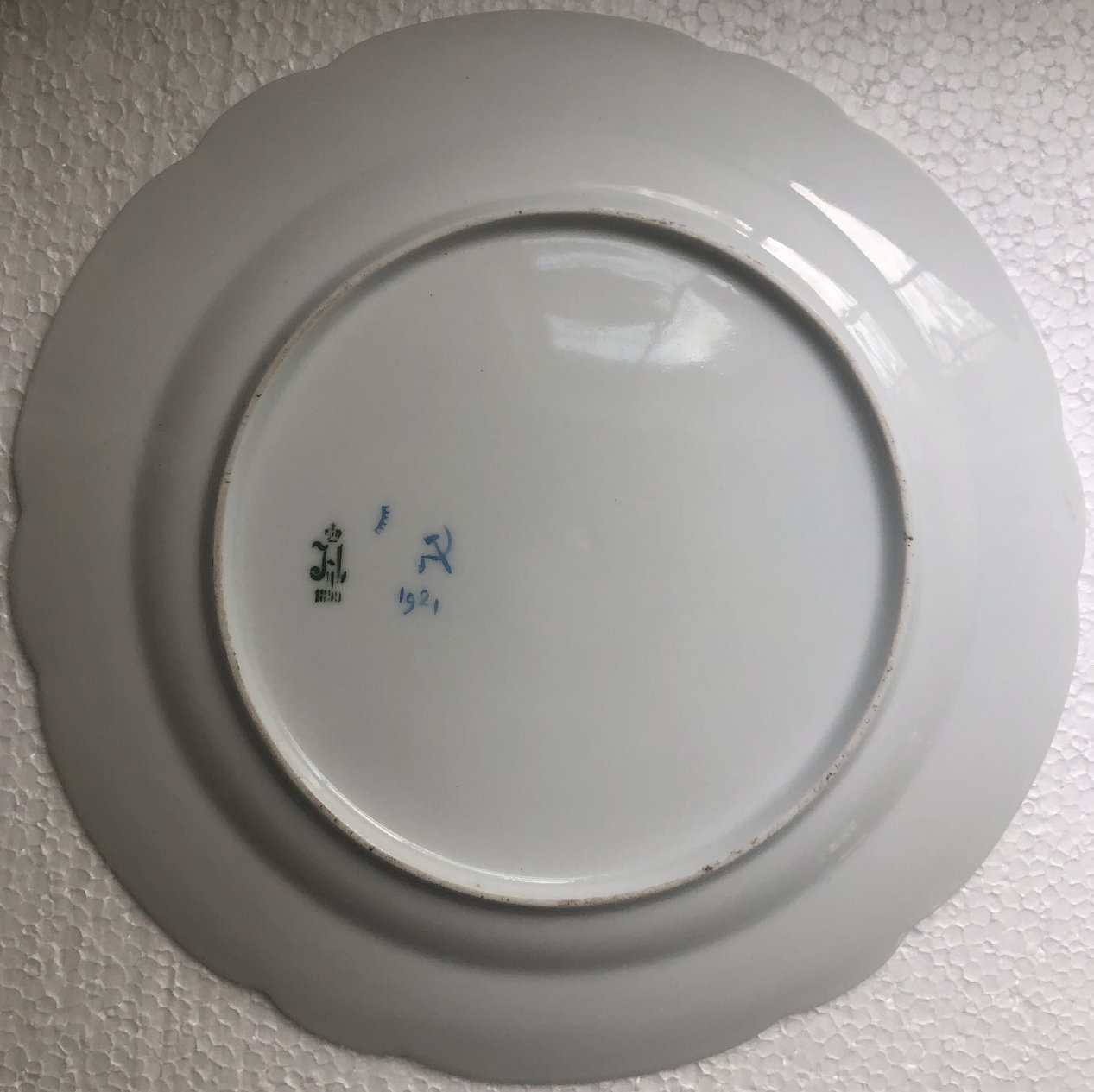
ГФЗ Государственный фарфоровый завод, Санкт-Петербург, 1921.
This painted plate with its striking design was made in Russia at the Imperial Porcelain Factory in St Petersburg (called Petrograd from 1914-24 and Leningrad from 1925-91) . The factory was founded in 1744 and worked exclusively for the Imperial court. In the Revolution it was nationalised; in 1925 it was renamed the Lomonossov Porcelain Factory. In the years immediately after 1917, most new products used undecorated blanks held in reserve. This plate uses a blank made in 1902, during the reign of Nicholas II. In 1918 Sergei Chekhonin was appointed art director. It was he who retrained the existing factory painters and supplied new designs to be used as propaganda for the Revolution. He also brought in other artists who occasionally painted their designs themselves, but more usually supplied them to be copied by the factory painters, as in this plate, decorated in 1921 after a design by Mikhail Adamovich (1884-1947). These designs illustrate a variety of styles, whether the lively imagery of Russian folklore, the traditional classicism of 19th-century history painting or the dynamic brushstrokes of the Futurist style, as seen here.
Plates like this one were actually made at the Imperial Porcelain Factory prior to the 1917 Revolution but were never decorated and remained in the factory, as a white-glazed blanks. Then years later, after the revolution had taken place and the Imperial family had been deposed, they were decorated at the same manufactury now renamed State Porcelain Factory while the city of St Petersburg was re-named Petrograd (later Leningrad).
This plate is a propaganda piece for the Communist revolution in Russia. To the left, a worker, painted in the revolutionary colour red, tramples a Russian word underfoot. The Cyrillic letters running across the plate from left to right spell out the word Kapital, or capitalism, the economic system the new regime sought to eradicate.
Communist Russia would no longer have private individuals creating and distributing goods. The means of economic production would be brought into the people’s hands, and the red factory in the background was now owned by the state. The colour red and the youthful figure of the worker marching toward a bright future with a tool in his hand are visual motifs found on many decorative objects from this era. It is a sign of a dynamic and modern state which has just reinvented itself.